


 +86 152 6060 5085

 English
 русский
 español
 português
 العربية
 Polski

- Home
- Products
- News
- Blog
- Customer Cases
- About Us
- Contact Us
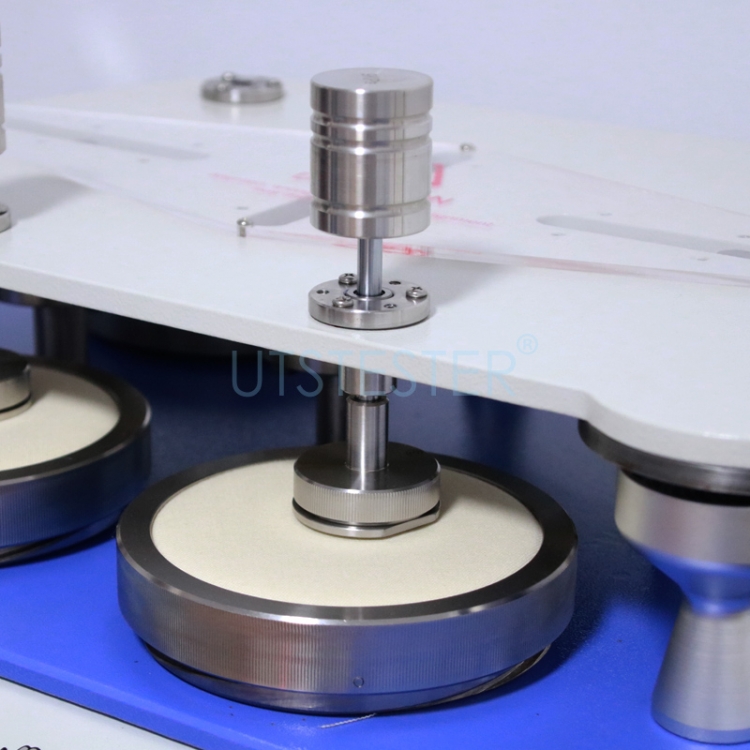
Model :
M008A-4Brand :
UTSTESTERCertificate :
CE, ISO 17025Lead Time :
10-15 DaysPayment :
TT, LCOriginal Region :
MADE IN CHINAPort Of Dispatch :
CHINA PORTStandards :
ISO 12947, ASTM D4966,SO12945-2, ASTM D4970, etc
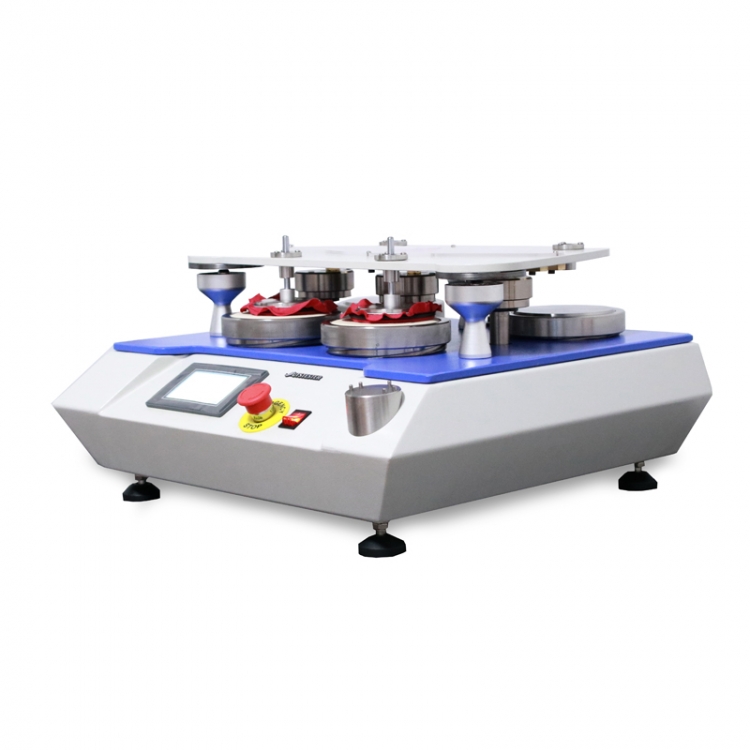
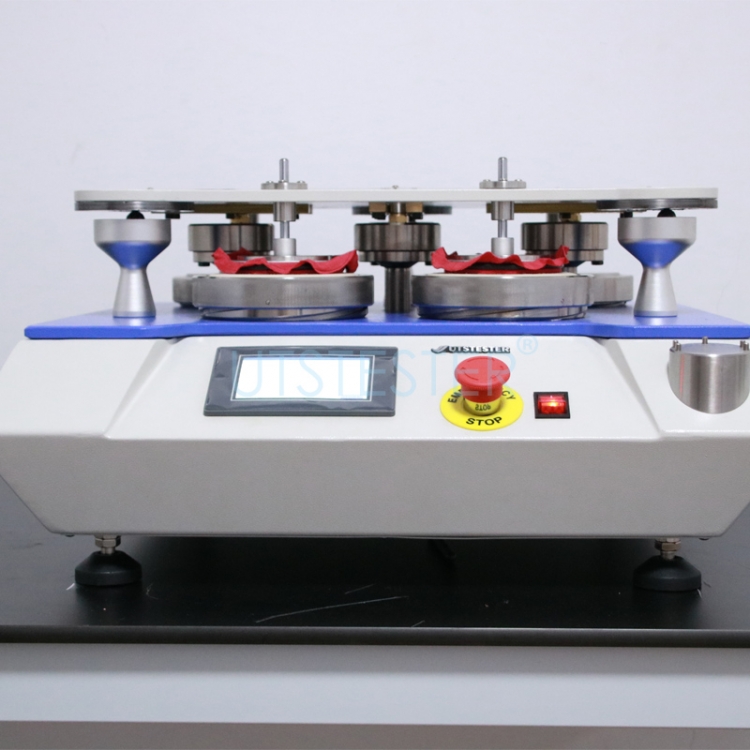
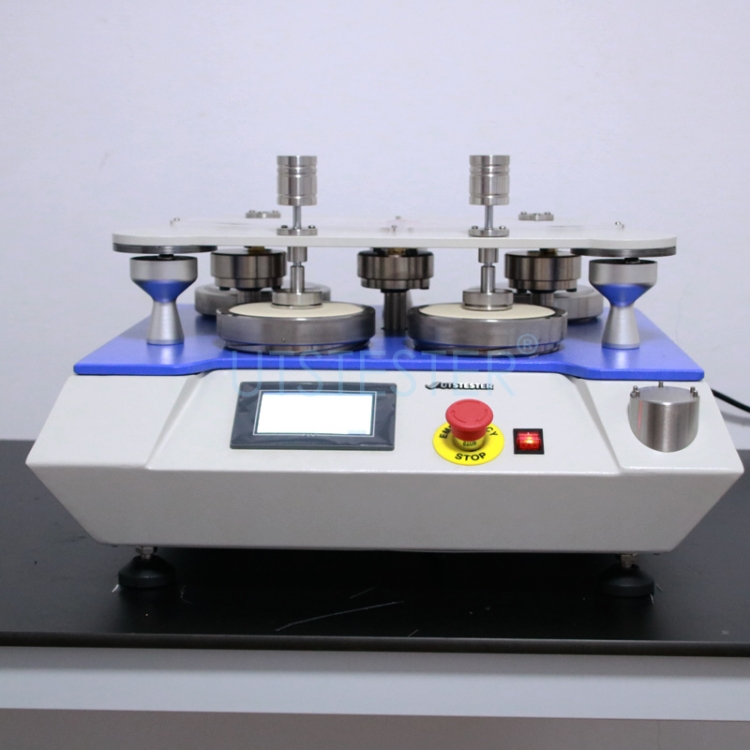
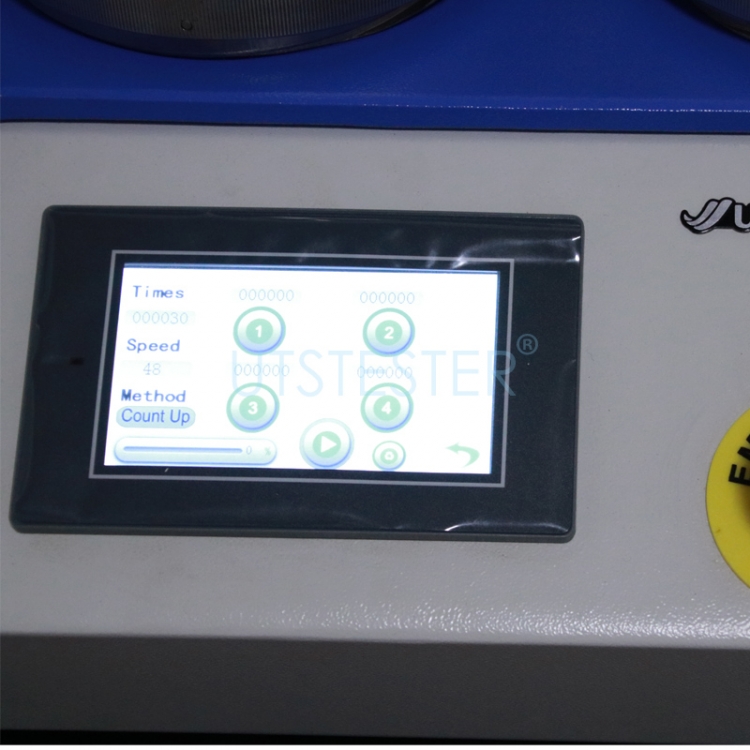
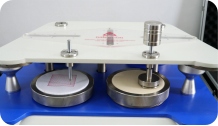
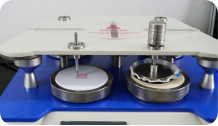
The Martindale is designed for multiple abrasion and pilling tests for various textile structures, including non-woven fabric, carpets, leather, socks, gloves, collars, cuffs, wood, high pressure laminates, painted surfaces, etc. The touch screen controller, with the most common functions accessible in one or two touches, makes this the easiest Martindale in the market to use.
4, 6, 8, 9 working positions and 2 counting Methods of count up & count down are available.
Standards
Abrasion: ISO 12947, ASTM D4966, IWS TM 112, M﹠S P19, Next 18, SN 198529, TWC 112, JIS L1096, GB/T 21196.2, GB/T 13775
Pilling: ISO12945-2, ASTM D4970, IWS TM 196, M﹠S P17, Next TM26, SN 198525, GB/T 4802.2.
Features
• Touch screen controller with individual station counters
• Light weight motion plate and storage rack
• Multiple speeds can be used for custom tests
• 4, 6, 8, or 9 position base uses the least bench space of large martindales
• Test head choices include standard abrasion, pilling.
• Motion according to 24mm and 60mm Lissajous track.
• Alarm after test finished
Key Parameters
Model
M008A-4
M008A-6
M008A-8
M008A-9
Working positions
4
6
8
9
Counting range
0~999999 times
Test load
Abrasion test
Sample holder: (198 ±2)g
Load for Funishings: (597±5)g
Sample holder: (198 ±2)g
Load for Garment material: (397±5)g
Pilling test
Stainless steel load: (155 ± 1) g
Stainless steel disc: (260 ± 1)g
Effective friction diameter of grinding block
A) Abrasion Holder : Φ(28.65 ± 0.05)mm
B) Pilling Holder : Φ(90 ± 0.10)mm
Rotational speed
47.5±2.5r/min(20-70 r/min adjustable)
Weight of loading hammer
2.5kg±0.5kg
Rubbing/pilling stroke
60 ±0.5mm
24 ±0.5mm
Power supply
1Phase AC 220V 50/60Hz 500W
Dimensions(L x W x H)(cm)
60×55×33
78×62×33
78×62×33
78×62×33
Weight(kg)
77
107
120
130
Demonstration
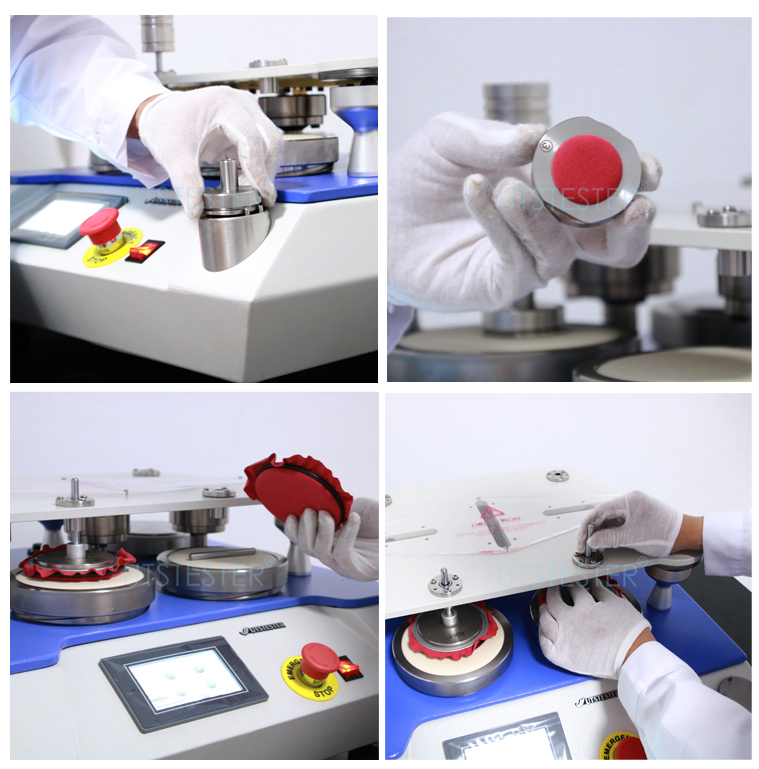
Materials To Be Tested
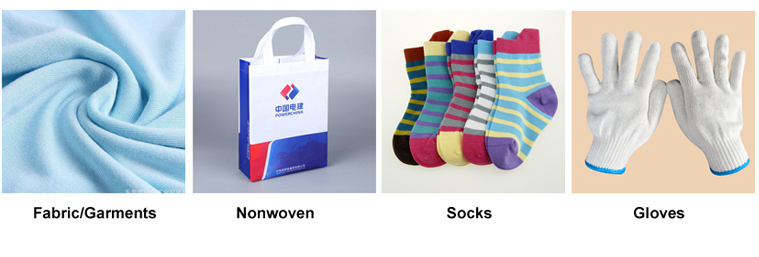
The Martindale is designed for multiple abrasion and pilling tests for various textile structures, including non-woven fabric, carpets, leather, socks, gloves, collars, cuffs, wood, high pressure laminates, painted surfaces, etc.4, 6, 8, 9 working positions and 2 counting Methods of count up & count down are available.
• Multi-position flexibility
Choose M008A-4, M008A-6, M008A-8 or M008A-9 to scale the number of active working positions without changing the core platform concept.
• Abrasion + pilling in one platform
The datasheet lists standard abrasion and pilling test heads. This allows one product family to cover two common surface-performance test categories.
• Touchscreen operation
A touch-screen controller provides access to common functions and individual station counters, reducing the need to manage every station from a shared manual count.
• Adjustable speed for method development
Nominal rotational speed is 47.5 +/- 2.5 r/min, with an adjustable range of 20-70 r/min for custom testing.
• Two motion tracks
The machine specifies 60 +/- 0.5 mm and 24 +/- 0.5 mm rubbing/pilling strokes, aligned with the stated Lissajous motion tracks.
• Independent test counting
Count-up and count-down methods are supported, with a counting range of 0-999,999 times.
• Compact bench planning
The source datasheet states that the 4/6/8/9-position bases are designed to use limited bench space relative to large Martindale configurations; the actual footprint varies by model.
• Test-finished alarm
A completion alarm helps operators identify when a programmed test has ended without continuously watching the machine.
1. Model Comparison
|
Model |
Stations |
Dimensions (L×W×H) |
Weight |
|
M008A-4 |
4 |
60×55×33 cm |
77 kg |
|
M008A-6 |
6 |
78×62×33 cm |
107 kg |
|
M008A-8 |
8 |
78×62×33 cm |
120 kg |
|
M008A-9 |
9 |
78×62×33 cm |
130 kg |
2.Abrasion Testing vs. Pilling Testing Comparison
|
|
|
|
|
Item |
Abrasion Testing |
Pilling Testing |
|
Primary purpose |
Evaluate resistance to surface wear produced by repeated rubbing. |
Evaluate propensity for pills, fuzzing or matting and related surface changes. |
|
Standard examples |
ISO 12947; ASTM D4966; IWS TM 112; M&S P19; Next 18; SN 198529; TWC 112; JIS L1096; GB/T 21196.2; GB/T 13775. |
ISO 12945-2; ASTM D4970; IWS TM 196; M&S P17; Next TM26; SN 198525; GB/T 4802.2. |
|
Holder / load examples |
Abrasion sample holder: 198 ±2 g; furnishings load 597 ±5 g; garment-material load 397 ±5 g. |
Stainless-steel load 155 ±1 g; stainless-steel disc 260 ±1 g. |
|
Motion / stroke |
60 +/- 0.5 mm and 24 +/- 0.5 mm tracks are specified for the platform. |
24 +/- 0.5 mm and 60 +/- 0.5 mm tracks are specified for the platform; the applicable method determines setup. |
3 Abrasion Testing vs. Pilling Testing Comparison
|
Test Methods |
Martindale Abrasion Test |
Taber Abrasion Test |
|
Test principle / motion |
The specimen is rubbed against an abradant using a repeated multi-directional Lissajous motion. This creates a broad, repeated rubbing action representative of multidirectional contact. |
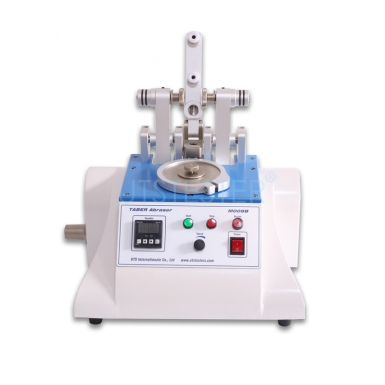
The specimen is mounted on a rotating platform and contacted by abrasive wheels. The wheels generate a circular abrasion track under a defined load. |
|
Types of Exercise |
The friction head drives the abrasive particles to perform complex planar motion, causing the specimen to slide in multiple directions relative to the abrasive particles. |
The specimen rotates around a vertical axis; the grinding wheel rotates with the specimen and slips, while the position of the grinding wheel remains fixed. |
|
Loading Method |
Pressure is applied using weights; common levels: 3 kPa (198 g), 9 kPa (595 g), 12 kPa (795 g) |
Pressure is applied via the loading arm; common load ratings: 250 g, 500 g, 1000 g (excluding the weight of the grinding wheel) |
|
Typical Abrasives |
Standard Wool Abrasive Cloth |
Specialized grinding wheels (such as H-18, H-22, CS-10, S-42, and other models with different hardness levels) |
|
Standards |
ISO 12947 series, ASTM D4966, GB/T 21196, BS 3424, DIN 53863, SATRA TM31 |
ASTM D3884、ASTM D1044、ISO 5470-1、ISO 9352、DIN 53754、TAPPI T476、JIS K7204 |
|
Applicable Materials |
Various woven fabrics, knitted fabrics, nonwoven fabrics, coated fabrics, leather, carpets, and upholstery fabrics |
Various types of textiles, plastics, coatings, rubber, paper, floor tiles, plywood, glass, metals, leather, and laminated materials |
|
Evaluation Criteria |
1. Total number of rubs until the specimen fails (most commonly used) 2. Changes in appearance (pilling, discoloration) 3. Loss of mass |
1. Mass loss (amount of wear) 2. Wear Index 3. Change in gloss 4. Wear depth / surface roughness |
FAQ
Q: Can one machine perform both abrasion and pilling tests?
A:Yes. The M008A product family is specified with both standard abrasion and pilling test-head options. The correct fixture, load and procedure must be selected for the applicable method.
Q: How many working positions are available?
A:Four configurations are listed: M008A-4, M008A-6, M008A-8 and M008A-9, corresponding to 4, 6, 8 and 9 working positions.
Q: Can the test speed be adjusted?
A:Yes. The listed nominal rotational speed is 47.5 +/- 2.5 r/min, with an adjustable range of 20-70 r/min for custom tests.
Q: What motion tracks are provided?
A:The datasheet specifies 24 +/- 0.5 mm and 60 +/- 0.5 mm rubbing / pilling strokes and describes motion according to 24 mm and 60 mm Lissajous tracks.
Q: What should a lab verify before purchasing?
A:Confirm the required standard edition, specimen / fixture requirements, applicable loads, number of simultaneous test positions, electrical supply, available bench space, and whether abrasion and pilling are both in the laboratory scope.
Q: How is pilling typically interpreted?
A:ASTM D4970 explains that pilling is influenced by fiber, yarn, fabric construction and finishing. The method uses visual standards for rating surface change, with the cited scale running from 5 (no pilling) to 1 (very severe pilling).
Q: Can the M008A be used for every fabric type?
A: Not automatically. ASTM D4966 states that the Martindale abrasion method is generally applicable to knit, woven and nonwoven fabrics but that material thickness and specimen mounting can limit suitability. ASTM D4970 similarly notes specimen-holder limitations and particular suitability for woven fabrics. Always check the current method and specimen requirements for the material being tested.
Q: How should I choose between M008A-4, -6, -8 and -9?
A: The core difference documented in the source sheet is the number of working positions and associated size/weight. Choose according to sample throughput, available bench space, and the laboratory’s test plan rather than treating the highest station count as automatically preferable.
Knowledge
Fabric Durability Evaluation: Abrasion Test vs. Pilling Test
Previous product
Digital Hydrostatic Head Tester M023CNext product :
Martindale Abrasion and Pilling Tester M008A-6PARTERNERS
Related Product

Room 312, Block D, Jiayuan Garden, No.2 Zhongfa Road, Zhangzhou City, Fujian Province, China

+86 152 6060 5085

+86 596 7686689






 hello@utstesters.com
 hello@utstesters.com
 +86 152 6060 5085
 +8615260605085
