


 +86 152 6060 5085
 English
 русский
 español
 português
 العربية
 Polski
- Home
- Products
- News
- Blog
- About Us
- Contact Us
Hot Products
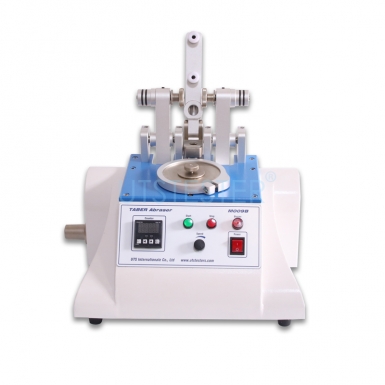
To determine the wear resistance(including mass loss, thickness loss, and transmittance etc.) of all kinds of structures including textiles, paper, glass, metals, paints, plated surfaces, coated materials, leather and rubber.
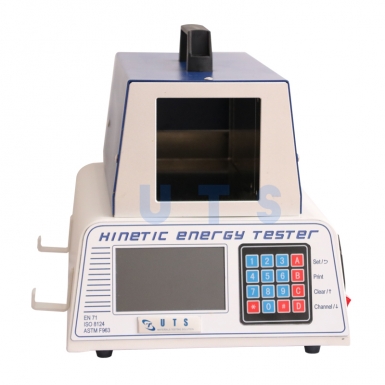
T011 Kinetic Energy Tester is used to test the maximum energy produced from projectile toy shoot bullets or launched bows, so as to evaluate ejection articles will cause injury for children or not.
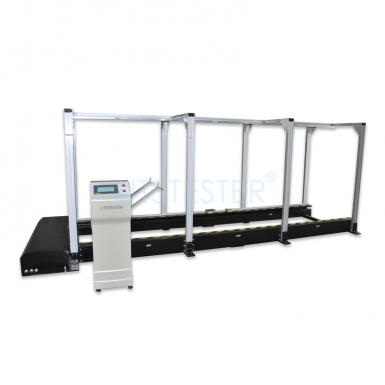
T012 Dynamic Strength & 2m/s Tester is used test dynamic strength for wheeled ride-on toys. Simulate children wheeled ride-on toys vertically crush the inelastic step 50 x 50 mm at the stable speed of 2m/s±0.2/s, and then check the damage degree. This device can be used for children ride-on toys, such as children tricycle, toy bikes, scooters, etc.
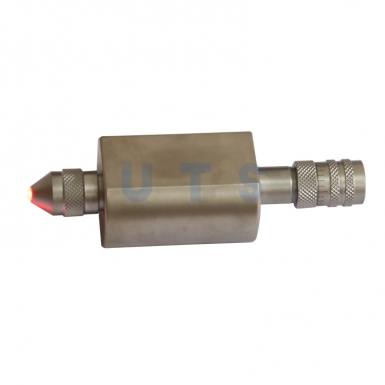
Sharp point tester is to determine whether accessible sharp points on child-related products are likely to cause injury. If the accessible sharp point penetrates a specified depth into the small rectangular opening of the tester, the LED is illuminated to indicate that the point is unacceptably sharp.
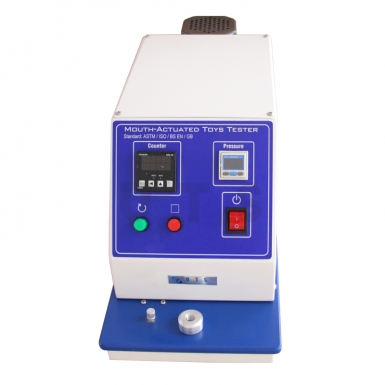
Used to test the safety of the Mouth-Actuated Toys, such as whistles with a ball, the sounders with a reed and other toys. Load the mouth-actuated projectile toy with the intended projectile and apply a pressure of 13,8 kPa ± 5 % in the direction of the mouthpiece for 5 s. Carry out the test 10 times in total.
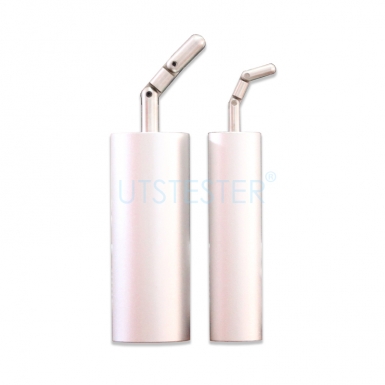
Accessibility Probe is used to assess the surface or components (points and surface of toys) of toys is likely to be touched and lead to hazardous. If the probe contacts the part or component, the part or component is considered to be accessible. Therefore, to do related tests based on standards to decrease hazards for children. This tools are including 2 parts: Probe A and Probe B. An accessible point for a toy or article intended for children 3 years of age or less is one that can be contacted by any portion forward of the collar of the accessibility probe designated as Probe A . An accessible point for a toy or article intended for children over 3 years of age is one that can be contacted by any portion forward of the collar of the accessibility probe designated as Probe B . An accessible point for a toy or article intended for children of ages spanning both age groups is one that can be contacted by any portion forward of the collar of either Probe A or B.
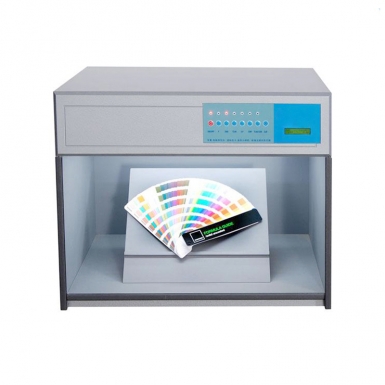
Color light box/Color matching cabinet, to do color matching or assessment for all industries and applications where there is a need to maintain color consistency and quality. Such as, Dyeing, Packaging, Printing, Footwear, Inks and Textile, Automotive, Ceramics, Cosmetics, Foodstuffs, Furniture, knitwear, Leather, Ophthalmic,etc. D65, TL84, CWF, F, UV, U30 light sources are available for this light box.
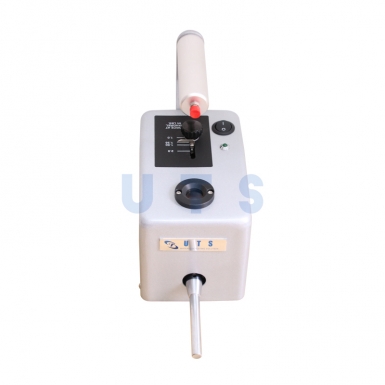
T001 Sharp edge tester is used to determine whether the accessible edges on child-related products are likely to cause potential risk of injury after normal use and reasonable abuse. Those child-related products include metal or glass edges on toys and other articles intended for use by children under 8 years of age.
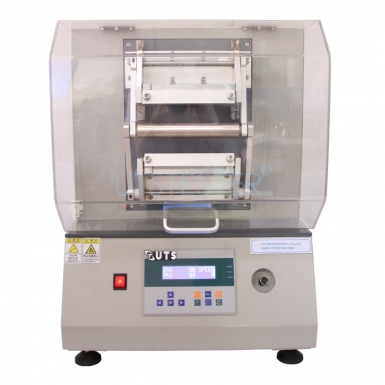
H018 Whole Sole Flexing Machine, to measure the material's resistance to incision elongation(cut growth) during repeated flexing, especially for outsoles of protective footwear, including soles. The machine has three vertical or horizontal stations available for customized and is easy to operate. Loading, unloading and measurements are also much easier to carry out with the workstations provided. The sample flexes at speed of 140 times per minute, and the exact number is recorded in a counter that has been preset to the required number of flexing. A fixture can be used to position the steel chisel, which can be used to support the sample after the initial chipping. All mobile parts that need access are fully protected with a fully interlocked security cover to ensure that the machine complies with the latest security regulations. A manual device can be used to measure the hardness of the outer bottom and check whether the outer bottom must be twisted in accordance with EN ISO 20344. UTS also provide a version of this machine for testing at low temperatures allowing tests to be conducted down to -20°C.
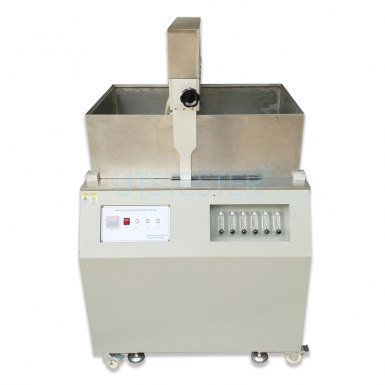
To determine the waterproofness property for finished shoes. Within the specified depth of water, whole shoe will be mechanically brushed by rotary wet brush, so as to measure the water penetration property for finished shoe.
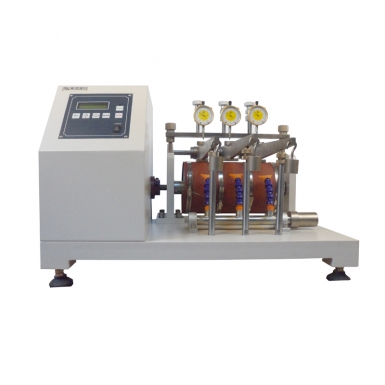
To determine the abrasion resistance property for rubber or other compounds, sole and heel materials which are not less than 2.54mm in thickness. This machine has memory function so that users can set the number of tests by themselves. The current records will be kept not to change even if power failure or stop occurs. It also can be connected to a cleaner for easy cleaning.
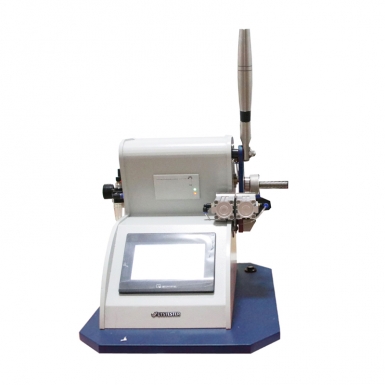
To determine the tearing resistance strength (Elmendorf method) for various textiles. Also available for thick paper, plastic cloth and electrical insulating tapes. Three interchangeable pendulums ranging from 16,000 to 128,000 Millinewtons (mN) can be selected separately for multiple test method compliance.
Latest news

We are pleased to announce that UTSTESTER (UTS International Co., Ltd.) will showcase its full range of textile testing solutions at the 19th FEBRATEX 2026 International Textile Industry Exhibition in...
I. Exhibition Overview The 19th FEBRATEX International Textile Industry Exhibition 2026 successfully concluded from August 18 to 21 at the Parque Vila Germânica exhibition center in Blumenau, Santa Ca...
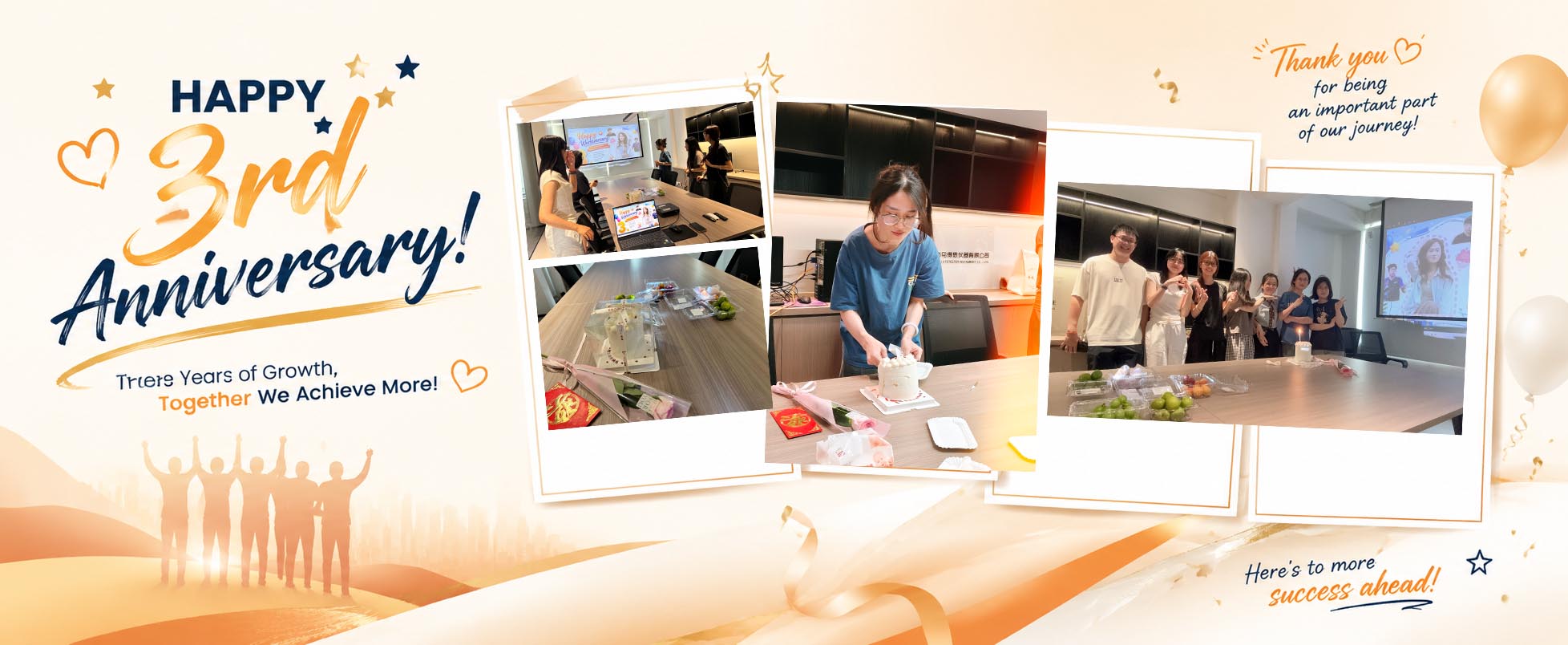
Three years mark persistence, growth, and the rapport built side‑by‑side. UTSTESTER recently held a heart‑warming commemorative event for team members reaching their three‑year work anniversary, payin...
2019-05-27
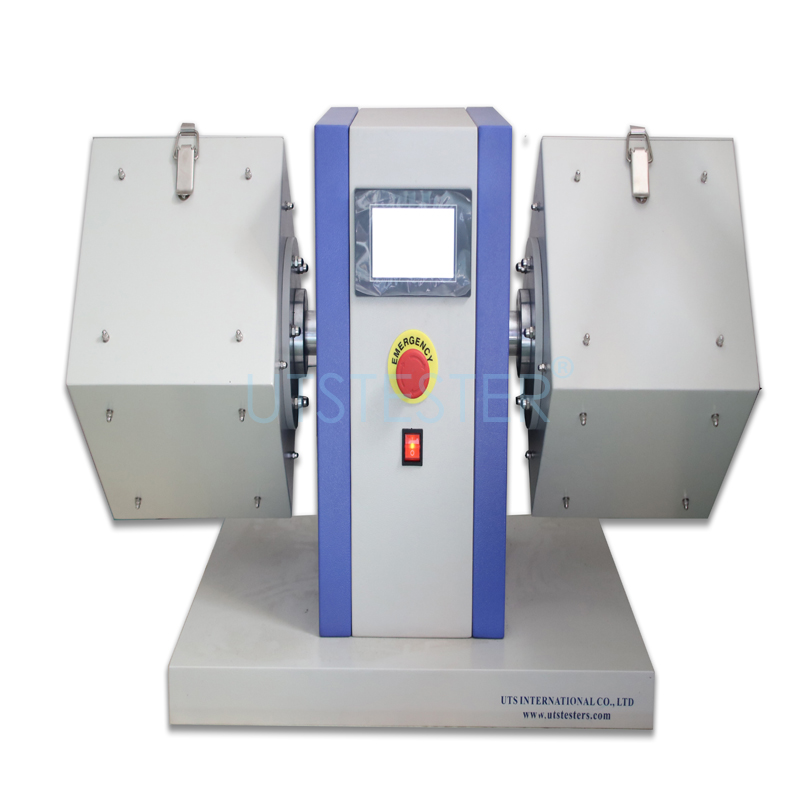
Method of rolling box pilling tester is used to detect wool knitting or pilling properties of wool-like knitted products, test standard ISO12945-1 and GB/T4802.3.
The polyurethane sample tube is the carrier of the roll box tester.A large number of tests have found that after the sample tube is used frequently for a long time, the shape of the surface of the tube basically does not change, but the elasticity of the tube body starts to decline, compared with the new tube, the hand feels stiff and the hardness is higher.According to GB/T4802.3 ─ 2008 appendix A, cork roll box line is A kind of need regular replacement of friction medium, due to the extensive use of the knitted fabric samples in the production of organic silicon, cork liner and become smooth, in the course of long-term exposure to lower friction coefficient, will reduce the pilling performance of the sample.
For this reason, how does the hardness of the polyurethane sample tube and the friction coefficient of the cork lining affect the pilling and pilling performance of the rolling box method?
I. test:
1. Sample preparation
The sample is made of pure wool knitted fabric which is easy to pilling. The pilling grade is around grade 2-4. Dark color, obvious pilling, intuitive grading, reducing subjective error.
2. Instruments and test materials
Utes rolling box-type pilling tester, speed (60 2) r/min;Laser rangefinder D3, accuracy + / - 0.3 °;Shore hardness tester, range 0 -- 100ShoreA;Sliding block;4 new polyurethane sample tubes in a group with half a year of pipe age and 4 old tubes in a group with six years of pipe age.
3. Test environment
The samples were tested in a constant temperature and humidity environment with temperature (20 2) and humidity (65 4) %.
4. Test scheme
(1) measure the friction coefficient of cork lining tan value (the following friction coefficient is expressed by tan value) : use the laser rangefinder to measure the horizontal Angle of sliding block at a constant speed, tan value is the friction coefficient of cork lining.
(2) measure the hardness of the new tube and the old tube: hold the shore hardness meter and press it on the surface of the sample tube until the lower end face of the contact is completely tangent to the tube surface, and read the HA value.The new tube and the old tube are represented by tube n and tube n# respectively (n is 1,2,3...)..
(3) the pilling performance of cork linings with different tan values was tested: samples were prepared by the same personnel, new tubes were used, the rotational speed (60 2) r/min was set, and 14400 revolutions were made. The samples were of the same sample, and the test results were graded by two persons.
(4) to test the pilling performance of new tubes and old tubes with different hardness: the same personnel shall prepare samples, use the same box with the same tan value, set the rotational speed (60 2) r/min, and 14400 revolutions, and the test results shall be graded by multiple people.
Ii. Analysis of influencing factors
1. Differences in tan values between different rolling boxes
This method can reduce the tedious work of removing and installing the cork liner, and is suitable for the inspection and daily calibration during the laboratory rolling box.Therefore, daily lab, cork line between different rolling box tan beta value differences, but the difference and meet the method standard GB/T4802 requirements.
2. Hardness difference between new and old polyurethane rubber pipes
The average hardness of the four new pipes with six months of pipe age was 52, 52, 52 and 49 degrees, and the hardness of the four old pipes with six years of pipe age was 64, 61, 60 and 57 degrees.Due to the different service life of the two groups of sample tubes, the elastic hardness value of the tube body showed obvious difference.Studies have shown that most glassy polymer materials are in a thermodynamic non-equilibrium state, which will gradually change to a stable equilibrium state under the glass transition temperature, resulting in the change of physical properties of the polymer materials.
3. Effects of different tan values of cork linings on pilling results of rolling boxes
The larger the tan of the cork liner, the more serious the pilling of the sample.The greater the difference of tan value between different box Numbers, the greater the range of pilling rating of the sample will be. For example, the difference of tan value is 0.09, which corresponds to the range of 0.5 grade of comprehensive rating.At the same time, when the difference of cork-lined tan value is small, even if the sample pilling is serious, the effect of this difference on the pilling result is not significant, or even contrary.It indicates that the sample itself has good pilling resistance. Although there is a difference in the tan value of cork lining, the difference caused by tan value does not have a significant impact on the pilling performance of the sample.
4. Influence of polyurethane rubber hose with different hardness on pilling result of rolling box
The new tube with smaller hardness has more serious pilling than the old tube with larger hardness. The average hardness difference between the new tube and the old tube is 9.25 degrees.There are obvious differences in pilling results among the same sample, the same tan value of cork liner and the same rotation speed and revolutions. With the different samples, the influence of such differences on pilling results is also different.
Email: hello@utstesters.com
Direct: + 86 152 6060 5085
Tel: +86-596-7686689
Web: www.utstesters.com
Previous article :
Common types and test methods for colour fastness of textilesNext article :
UTSTESTER provide toys safety tester
Room 312, Block D, Jiayuan Garden, No.2 Zhongfa Road, Zhangzhou City, Fujian Province, China

+86 152 6060 5085

+86 596 7686689


 hello@utstesters.com
 hello@utstesters.com
 +86 152 6060 5085
 +8615260605085